MNB - Trump declares phosphate fertiliser emergency with signed Executive Order
On the 29th of June, President Trump signed the following executive order - declaring a state of emergency regarding phosphate fertilisers.
Declaring “an emergency regarding threats to availability of sufficient supplies of fertilizers to meet America’s agricultural demand”...
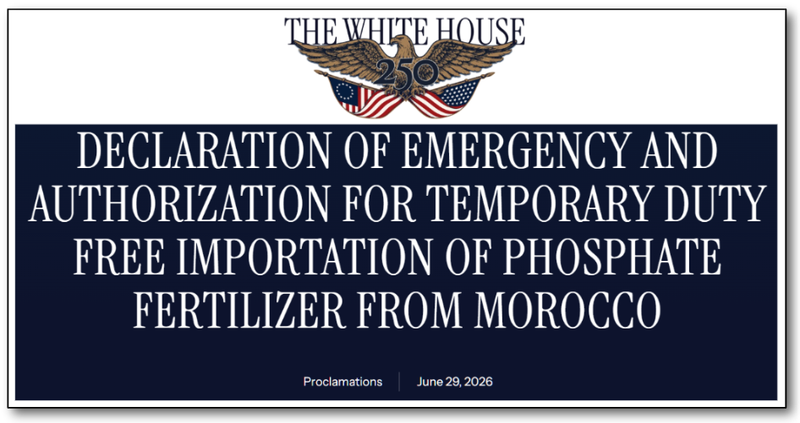
(source)
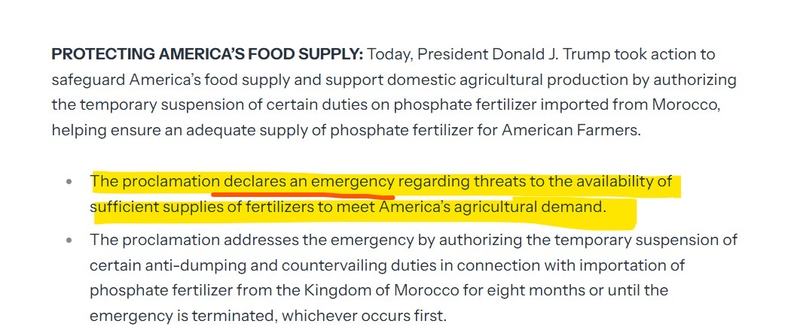
Phosphate is the key ingredient in fertiliser, which is used to grow food, the more fertiliser you have, the higher the yield from food production.
A reduction in fertiliser supply simply means less food than usual gets grown and now the world's biggest economy just officially declared that it doesn't have enough fertiliser, to feed the crops that feed its people.
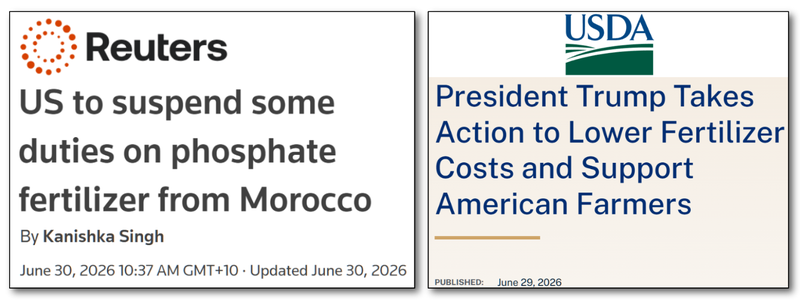
Here are a couple of headlines:
We think this has setup a nice tailwind for our Investment Minbos Resources (ASX: MNB), which is currently towards the back end of building of its Phosphate Fertilizer Plant in Angola.
MNB owns a world-class, high-grade phosphate deposit in Angola and is building the country's only integrated phosphate mine and fertiliser plant that will feed it.
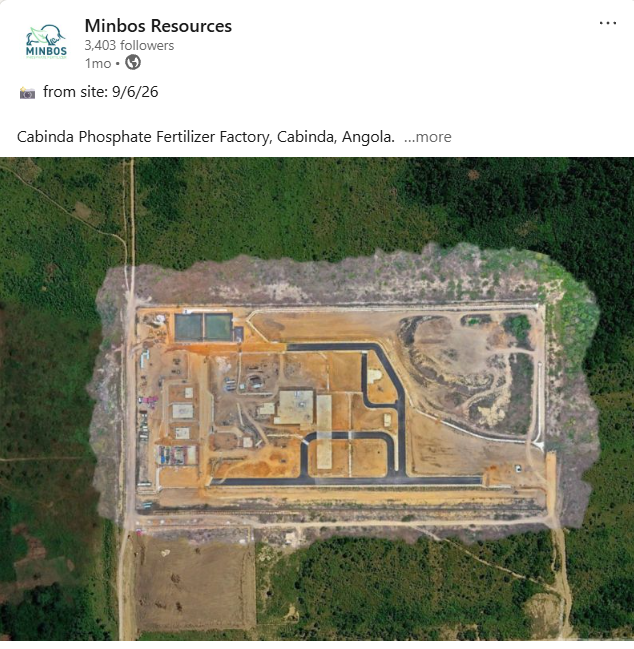
Here is a look at construction form last month:
We just increased our Investment in MNB - read our note from Monday to see why: We just put more money into MNB…here's why
Food security is now official US policy
A big part of our MNB thesis is the "food security" macro - the idea that governments would eventually start treating fertiliser like a strategic resource.
(Although we had expected this to come from mainly within Africa which has well documented food security issues, not the US).
An emergency declaration from the White House is about as clear a signal as it gets that there is a significant supply issue at hand.
The US cutting duties on Moroccan phosphate makes two things clear, both of which are clearly outlined in the Executive Order.
- Firstly, domestic production is not enough to cover what American farmers need.
- Secondly, the US is willing to look toward Africa for phosphate supply in the meantime.
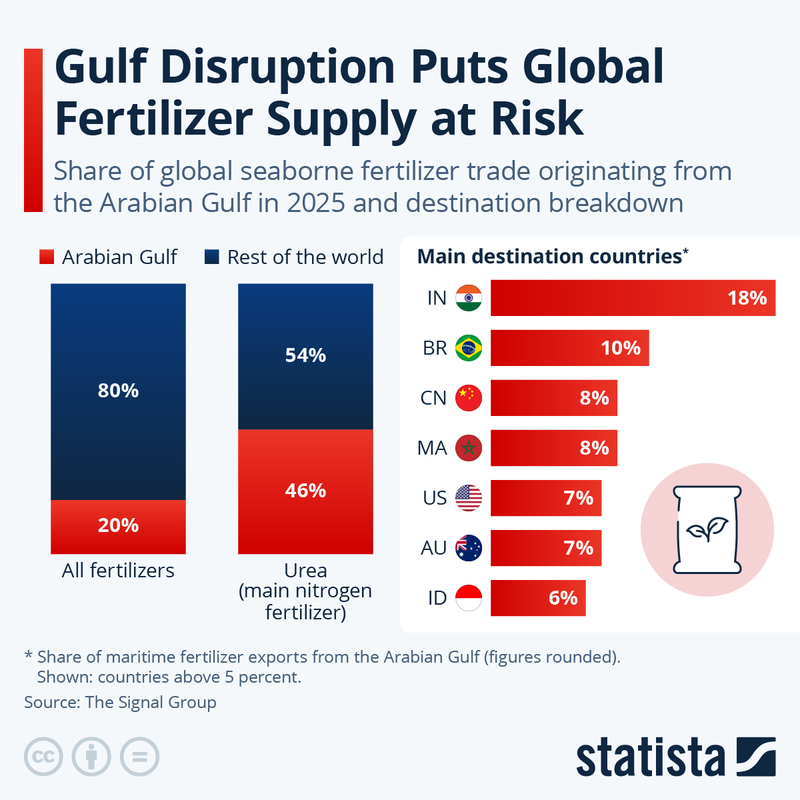
It also comes at a time where fertiliser exports globally are at risk from the US-Iran war…
Up to 30% of the world's traded fertiliser normally moves through the Strait of Hormuz.
Including around a third of global urea exports and close to half of all the sulfur used to make phosphate fertiliser.
The buyers left most exposed are import-dependent countries (which is why we think there is a tailwind for MNB now.
(source)
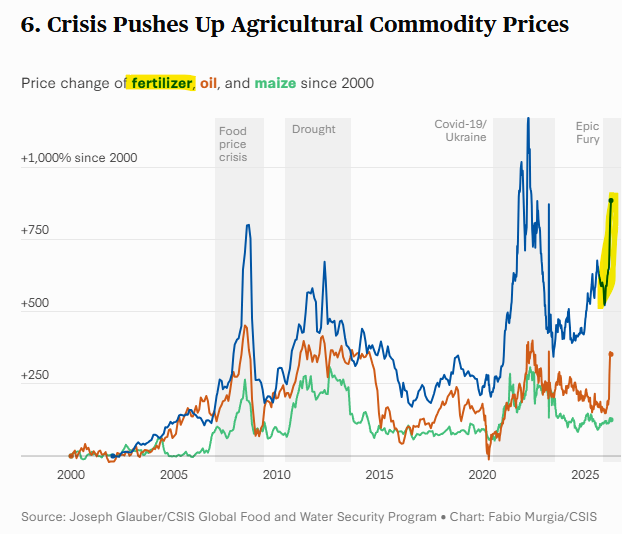
Here is how the strait closure impacts fertilizer prices:
(source)
Where MNB fits in
MNB’s go to market strategy for its product is to sell locally into the Angolan market AND sell product into the export market.
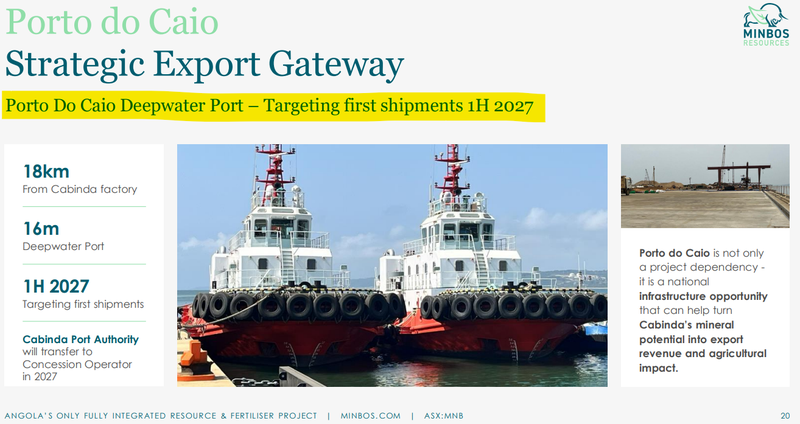
MNB expects to be shipping export product through the Porto do Caio deepwater port targeted in H1-2027. (source)
We think the news out of the US just made the export story more interesting for MNB.
What do we expect MNB to deliver?
Complete Phase 2 construction
We want to see the plant assembled and reach dry commissioning.
Here are the milestones we are tracking:
- ✅ Civil works complete
- 🔄 Structural steel and mechanical installation
- 🔲 Electrical, instrumentation and process control installed
- 🔲 Dry commissioning achieved
Complete the funding package
We want the full project funding closed out to cover construction AND ramp-up to full operations (“wet commissioning”).
Here are the milestones we are tracking:
- 🔄 Transfer of Mining Investment Contract and Mining License
- ✅ US$10M FSDEA equity received
- ✅ US$16M IDC loan signed, drawdowns underway
- 🔄 US$5.48M Banco de Fomento Angola facility formalised
- 🔄 Working capital facility secured (FSDEA joint task force)
First production and first sales
We want to see the plant wet commissioned, first product produced, and first revenue banked.
Here are the milestones we are tracking:
- 🔲 Wet commissioning
- 🔲 THE photo: the first sack of Angolan-produced phosphate Fertiliser
- 🔲 First shipment to a customer (including any early unprocessed rock sales)
- 🔲 Binding offtake agreement(s) converted from existing MoUs/HOAs
- 🔲 First revenues reported